
Why the Lone Patron Is the Modern Pubs Most Overlooked Asset
Entering a busy pub alone can feel strangely exposing. A customer may pause just inside the door, scanning for a table that is neither too central nor hidden away, while staff appear occupied and groups seem to have claimed the room. If the first question is “Just the one?”, the message can land badly, even when no offence is intended. It suggests that a single customer is an inconvenience rather than a welcome guest.
That matters commercially as well as socially. Hospitality margins remain tight, customers are visiting less frequently, and every usable seat has to earn its keep. Yet a solo diner can become reliable weekday trade, a regular who orders thoughtfully, recommends the pub and returns when larger groups are unavailable. The opportunity is to stop treating one cover as incomplete business and start recognising it as a potentially loyal, high-value relationship.
The Commercial Case for Welcoming the Table for One
Solo customers often bring a useful combination of flexibility and consistency. They may arrive before the evening rush, choose a premium pint, order a glass of wine with food, or settle in for a quiet meal after work. Unlike a large party, they rarely require extensive table rearrangement, complicated bill splitting or prolonged coordination between several orders. Their visit can fit neatly into quieter trading periods and help create a lived-in atmosphere that attracts others.
The strongest commercial case is repeat custom. A person who knows that a pub offers a comfortable seat, attentive service and an easy meal is more likely to return regularly than a visitor who feels tolerated. Over time, a Tuesday customer who visits twice a month may contribute more dependable revenue than an occasional large booking that arrives only for celebrations. The key measure is not the size of one transaction but the quality and frequency of the relationship.
Recent trading patterns underline why adaptability matters. In early 2026, 161 British pubs reportedly closed during the first quarter, while Wales recorded several openings despite the wider pressure. The venues showing resilience are responding to local needs through food, atmosphere, entertainment, community activity and more varied customer profiles. This broader lesson is captured in the BBC report on Welsh pubs fighting back, where changing the offer is presented as central to survival.
| Customer pattern | Operational opportunity | Commercial value |
|---|---|---|
| Solo weekday visitor | Use quieter tables and maintain atmosphere | Reliable repeat trade |
| Solo diner before or after work | Offer quick, flexible ordering | Efficient table use |
| Regular bar customer | Remember preferences and greet warmly | Strong retention and word of mouth |
| Occasional solo explorer | Recommend dishes and drinks | Higher spend and positive reviews |
Large groups can generate impressive single-session takings, but they also create peaks and pressures. Solo diners support a steadier base, especially when they are encouraged to use the bar, counter or a well-positioned two-top. A simple review of covers by day, arrival time, spend and return frequency can reveal whether the venue is undervaluing this segment.
Designing the Floor Plan for Dignity and Comfort
Seat selection communicates status. The table beside the kitchen swing door, underneath a service shelf or in a draughty corner should not automatically become the “one-person table”. If staff would hesitate to offer it to a couple, it is not suitable for a solo guest. Noise, passing traffic, strong smells and constant staff movement can make a customer feel parked rather than hosted.
Bar and counter seating can be excellent, but only when it is designed for dining rather than drinking alone. A guest needs enough depth for a plate, cutlery, a drink and perhaps a phone or book without constantly guarding personal space. Counter stools should be stable and comfortable, with clear legroom and sensible spacing. Where dimensions are being reconsidered, test the setting with an actual plate and pint rather than relying on an empty tabletop.
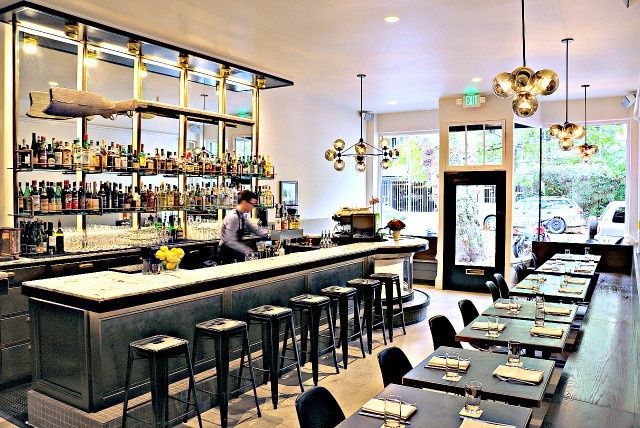
Good solo seating offers choice. Some customers want a view of the room and the gentle energy of the bar; others prefer a wall, window or booth that provides privacy. The aim is to create varied sightlines without placing one person on display in the middle of a room. A window-facing perch, an end seat at a communal table and a small table along the edge can all work, provided the guest can see enough activity to feel included.
- Remove isolated seats exposed to draughts, doors, kitchen traffic or cleaning activity.
- Keep at least one attractive, clearly available seat for customers arriving alone.
- Provide enough table depth for a main course and drink together.
- Use lighting that feels warm and practical, not like a spotlight.
- Check that solo seats have easy access without forcing guests through crowded tables.
Staff should also understand how the layout is intended to work. If a counter is available, the host can offer it as a positive option rather than a consolation prize: “There is a comfortable seat at the bar if you would like to watch the room, or a quiet table by the window.” That small choice restores control and makes the customer feel expected.
Subtle Front of House Gestures That Make or Break the Visit
Language sets the tone before the menu is opened. Replace “Just the one?” with “Good evening, where would you be most comfortable?” or “Welcome in, there is a choice of a table or a seat at the bar.” Neutral, warm wording avoids implying that the customer has arrived without the socially correct number of companions. It also gives staff a useful route into discussing preferences rather than making assumptions.
Training should cover social cues as carefully as service sequence. Some solo diners welcome a recommendation, a brief conversation or an explanation of the beer list. Others are using the meal as quiet time and will appreciate efficient service with no unnecessary interruptions. Staff should look for signals such as a book, headphones, focused reading or limited eye contact, while remaining ready to respond promptly when the customer seeks help.
Pacing is particularly important. A solo diner should not be hurried because the table is small, nor forgotten because the customer is quiet. Delayed menus, unanswered questions and an absent bill request are remembered. Research in Customer Restaurant Choice shows that past experience, reputation, word of mouth and online reviews all influence restaurant decisions. Consistently attentive service therefore affects not only the current bill but also whether the guest returns and what they tell others.
- Welcome the guest promptly and offer a genuine seating choice.
- Explain ordering options without drawing attention to the fact that the customer is alone.
- Ask one useful question, such as whether the guest wants a quick meal or time to relax.
- Match conversation and check-ins to the customer”s response.
- Close the visit warmly, making it easy to return without sounding overly familiar.
Operationally, this can be built into pre-shift briefings. Teams can agree which seats are available, which dishes are quick to serve and how to handle busy periods without making one customer feel disposable. A manager should also read reviews for phrases such as “made to feel welcome”, “ignored”, “awkward seating” or “great service”. These comments often reveal the true experience more clearly than sales figures alone.
Menu Formats That Encourage Confident Solo Ordering
Menus can either reassure a solo diner or make the visit unnecessarily difficult. Large sharing boards, fixed multi-course formats and dishes designed for several people may be appealing for groups but intimidating for one. Flexible small plates and half-portions allow a customer to build a satisfying meal without over-ordering. They also create opportunities to try something unfamiliar, which can lift spend without forcing a full main course.
- Offer selected half-portions where preparation remains commercially sensible.
- Group small plates into a clear light-meal suggestion.
- Provide single-serve wine, beer and alcohol-free alternatives rather than only full bottles.
- Use carafes or smaller pours to give guests choice beyond the standard house glass.
- Position substantial bar snacks as legitimate light suppers, not merely extras.
A concise staff recommendation can remove hesitation. “The soup and cheese toastie make a good lighter meal,” or “Two small plates are usually enough for one person” is more useful than leaving the guest to calculate portions alone. Menu engineering also helps protect margins: highlight dishes that use overlapping ingredients, travel well from kitchen to counter and can be served efficiently during a busy shift.
Value matters in 2026, as customers are weighing eating out against supermarkets, delivery and cheaper formats. That does not mean reducing every price. It means giving solo guests control over portion, spend and pace. A well-designed bar snack menu, a satisfying lunch plate and a credible alcohol-free drink can turn a hesitant visit into a comfortable routine.
Turn Your Lone Diners Into Your Venues Fiercest Champions
Welcoming solo diners is not a single gesture; it is a chain of decisions. The floor plan must offer attractive, comfortable seats. The bar must accommodate plates as well as pints. Lighting, noise and sightlines should make a customer feel part of the room without becoming its centrepiece. Menus should provide flexible portions and drinks, while staff should use language that communicates welcome rather than surprise.
The British pub has always been more than a place to buy alcohol. At its best, it is a shared local space where people can eat, read, work, watch the room or simply spend an hour in company without needing to arrange a group first. That role has added importance when many people experience busy lives and social isolation. Operators should audit the venue from the perspective of a person arriving alone: where would that guest sit, how quickly would they be acknowledged, what could they order confidently, and what would make a return visit feel natural? Fix those points, measure repeat trade, and the table for one can become one of the venue”s most dependable sources of loyalty.