
The Quiet Cash Drain in British Cellars
On a busy Friday evening, a little beer seems to disappear everywhere. A tap opens before the glass is in position, foam collapses into the drip tray, a rushed pint is topped up, and a line is flushed after a keg change. Each incident feels too small to worry about while the queue is building. Across a full week, however, those small losses become a significant quantity of saleable beer.
Ullage is often treated as an unavoidable cost of doing business, but that assumption is expensive. Better cellar control, balanced dispense equipment, disciplined cleaning and consistent pouring can recover a meaningful share of the product currently being discarded. A reduction of 3% to 5% in draught loss can materially improve operating margins, particularly where beer sales are high but labour, energy and rent leave little room for error. The practical benchmark is simple: every keg should produce a predictable yield, every discarded pint should have a recorded reason, and every member of staff should understand how quality and profitability are connected.
The Real Cost of Pint Line Waste and Foam
Draught shrinkage rarely has one dramatic cause. It is usually a collection of ordinary faults: beer sacrificed during line flushing, foam discarded after an unbalanced pour, overfilled glasses, customer changes of mind, breakages, slow leaks and beer lost when a keg runs empty. Poor storage and weak stock rotation can add further losses, while an unrecorded staff drink or casual top-up makes the final variance harder to explain. Guidance on bar stock control highlights how waste, over-pouring and other leakage can materially weaken beverage margins.
The financial effect becomes clearer when yield is measured rather than guessed. A keg”s purchase price should be divided by the number of genuinely saleable pours, not the theoretical number obtained by dividing its volume by the legal serving size. Foam waste reduces usable yield, so the cost per pint rises even when the supplier price remains unchanged. Industry guidance and calculator examples commonly use waste assumptions ranging from modest losses to far higher levels, but the correct figure for a venue is the one established through its own keg weights, till sales and wastage records.
| Operational condition | Typical pattern | Commercial consequence |
|---|---|---|
| Loosely managed cellar and bar | Frequent foam, unrecorded spills, inconsistent pours and avoidable line waste | Lower keg yield, unexplained stock variance and weaker gross margin |
| Controlled operation | Stable temperature, balanced pressure, planned cleaning and measured portions | More saleable pints, fewer complaints and clearer accountability |
| Tightly managed operation | Daily checks, recorded causes, trained staff and prompt fault correction | Potential recovery of several percentage points of draught margin |
A daily bar wastage sheet is one of the simplest diagnostic tools available. Staff should record the product, approximate volume and reason for every discarded pour, including line cleaning, keg changes, excessive foam, spills, breakages and rejected drinks. The purpose is not to create blame. It is to reveal patterns. If losses peak after a particular keg is connected, the fault may be pressure or temperature. If waste rises during a particular shift, the issue may be technique or supervision. A supervisor sign-off at the end of each night turns casual observations into usable operational information.
Getting Cellar Climate and Pressure Perfectly Dialled
Beer dispense works best when the conditions in the cellar support the conditions in the glass. For the setup described in this operating benchmark, cold storage should be held strictly between 11°C and 13°C, with temperatures checked using a reliable thermometer rather than judged by touch. Beer that is too warm releases dissolved gas rapidly and fobs at the tap. Beer that is too cold can pour slowly, present poorly and encourage staff to compensate with pressure changes that create further instability.
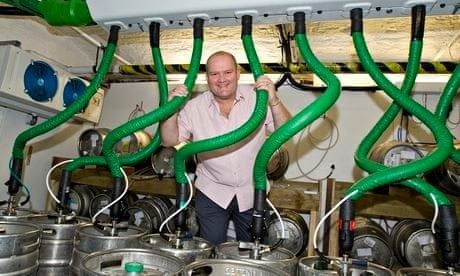
Pressure must be matched to the beer, the gas blend, the line length and the vertical distance between keg and tap. Mixed gas systems are useful for beers with different carbonation requirements, but one pressure setting across every product is rarely satisfactory. Excessive pressure can over-carbonate beer, produce an aggressive stream and create persistent bubbles. Insufficient pressure can cause a sluggish pour and allow carbonation to fall out of solution. A balanced system delivers beer at a controlled rate without relying on the tap to disguise faults.
- Check cellar temperature at a consistent time each day and record the result.
- Confirm the gas type and pressure against the beer style and dispense specification.
- Use secondary regulators where different beers require separate pressure settings.
- Inspect couplers, seals, connections and beer lines for leaks or damage.
- Fit Foam-On-Beer detectors where appropriate, so an empty keg does not push gas through a line and create a foam-filled restart.
FOB detectors can stop flow when a keg empties, helping keep the supply line full and reducing the waste associated with foaming during keg changes. They are particularly useful on longer-draw systems, although they still require correct installation, cleaning and resetting. Understanding the mechanical hydraulics of cellar dispense, from pressurised keg systems to traditional cask delivery using a manual beer engine, ensures gas equilibrium remains stable. When a line repeatedly fobs, changing pressure at random is rarely the best first response. Check temperature, gas balance, line condition and the keg connection method in a logical order.
Mastering Line Hygiene Without Pouring Profits Away
Clean lines protect both beer quality and yield. Deposits, yeast, biofilm and contamination can affect flavour, restrict flow and encourage fobbing. The familiar phrase “clean the lines every seven days” is a useful starting point, but it should not become a substitute for risk-based judgement, supplier instructions and documented checks. Products, throughput, system design and periods of closure all affect the right routine. A high-volume line serving a sensitive product may need closer attention than a rarely used line, while an extended shutdown requires a carefully planned clean before service resumes.
Cleaning does involve beer loss, but an uncontrolled clean wastes much more than a planned one. The aim is to remove contaminated product and cleaning solution thoroughly while avoiding unnecessary flushing. The procedure should be written down, timed and assigned to a trained person. Staff should know which solution is being used, how long it must contact the line, how the system is rinsed and what quality checks are required before the beer returns to the bar. Practical training resources from Cask Marque provide guidance on line cleaning, cellar management and glass care.
- Confirm the cleaning schedule, product instructions and correct protective equipment before starting.
- Isolate the keg and retain usable beer wherever the system and food-safety procedure allow.
- Flush the line with the required volume of water, then circulate the approved cleaning solution for the specified contact time.
- Rinse thoroughly until the water is clear and free from chemical residue.
- Reconnect the keg, pull through only enough beer to displace rinse water, and check aroma, appearance, temperature and pour quality.
- Record the date, line, operator, chemical and any fault discovered during the clean.
Poor protocols create a costly cycle. Dirty lines produce cloudy or tainted beer, which leads to complaints and rejected pints. In response, staff may repeatedly rinse, adjust pressure or pull test glasses, losing more product without addressing the underlying problem. Training changes that pattern by giving cellar staff a clear fault-finding process. A short refresher, a visible cleaning charter and periodic observation can turn maintenance from a chore into a margin-saving routine.
Front of House Habits That Protect Every Millilitre
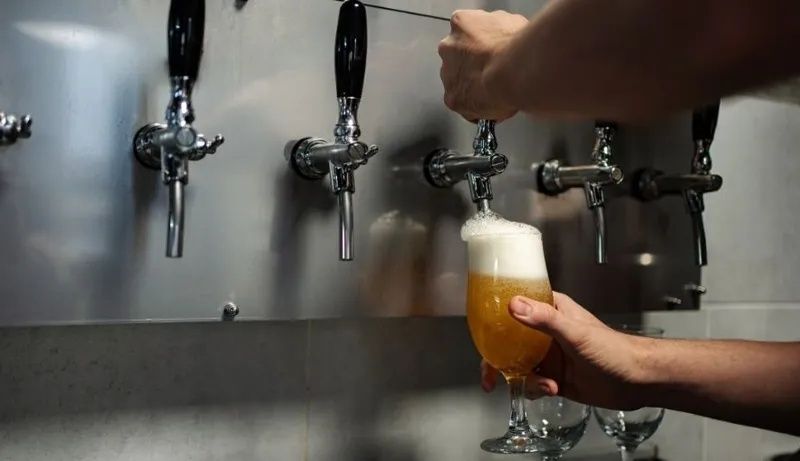
The bar team controls the final stage of yield. One common habit is opening the tap before positioning the glass, allowing the first part of the pour to run into the drip tray. The loss from one opening may appear negligible, but repeated across hundreds or thousands of drinks it becomes a predictable reduction in keg yield. The glass should be ready first, the tap opened decisively, and the flow directed into the side of the glass without unnecessary splashing.
A correct pour is both a quality standard and a commercial discipline. Begin with the glass at approximately a 45-degree angle, keep the nozzle clear of the beer and gradually bring the glass upright as it fills. The final head should be appropriate to the product and serving standard, not a mound of foam that must be discarded or a flat surface that invites careless topping-up. Staff should never use the slop tray as a routine correction for poor technique. If the pour is wrong, the cause belongs in the training conversation and the wastage record.
- Position the glass before opening the tap.
- Keep the tap nozzle clean and out of contact with the glass.
- Pour at the correct angle, then finish upright to form a controlled head.
- Do not top up repeatedly simply to chase a preferred appearance.
- Use calibrated glassware and serve the certified quantity required for the product.
- Record rejected or discarded pints and explain the reason clearly.
Good technique must sit alongside legal compliance. Staff must serve the certified measure required by the venue”s glassware and licensing arrangements, while avoiding careless over-pouring that gives away product without improving the customer experience. Staff must balance tight pour technique with UK compliance rules overseen by local authorities enforcing official weights and measures standards to avoid both legal breaches and careless over-pouring. A brief observation during service, followed by supportive coaching, is more effective than a one-off instruction during induction.
The strongest teams take pride in consistency. Customers notice when every pint arrives cold, clean, correctly measured and attractively presented. Managers can reinforce that standard by sharing weekly waste figures, recognising improvements and explaining what saved beer means in practical terms. Training should cover the tap, glass, head, temperature, complaint handling and the reason behind each step. When front-of-house staff understand that careful pouring protects both guest experience and the venue”s ability to invest in people and service, waste reduction becomes part of hospitality rather than a finance exercise.
Turn Draught Discipline into Lasting Margin Protection
Ullage reduction works when the cellar and bar operate as one system. Cellar staff control temperature, gas, connections, hygiene and equipment condition. Front-of-house staff control the final pour, measure and presentation. Neither side can protect yield alone. A perfectly balanced line can still lose beer through careless pouring, while an attentive bartender cannot compensate for warm beer, dirty lines or unstable pressure.
Start with a seven-day review of cellar temperature, gas settings, keg yields, line-cleaning records and daily wastage sheets. Identify the three largest causes of loss, correct those first and measure the result rather than introducing too many changes at once. Share the number of pints saved with the team, check improvements at each stocktake and investigate any sudden variance promptly. Treating every pint as a product that deserves care protects quality, keeps regulars coming back and turns draught discipline into lasting margin protection.